
Finish options

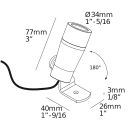
KIX
KIX S
Flexible, sutil, elegante y potente: estas son las palabras clave que describen a Kix a la perfección. A pesar de su apariencia de perfil bajo, Kix sobresale en calidad y salida de luz, ideal para la iluminación de caminos u otras aplicaciones paisajísticas. Kix es fácil y flexible de usar gracias al cabezal orientable, diseñado para proporcionar una refrigeración óptima y eliminar el deslumbramiento.
Kix está disponible para su instalación en la pared o el piso, para sujetar alrededor de un árbol o para montar en áreas verdes suaves con una estaca. Además de la versión más robusta de Kix, también hay disponible una versión S (pequeño) y M (edio). Kix S combina un powerLED con una lente, lo que da como resultado un agradable haz de luz de 10°. Todos los modelos tienen una clasificación IP65. Kix y Kix M(edium) tienen opciones para accesorios de nido de abeja y pantalla para controlar el deslumbramiento.
MATERIALES Y ACABADOS
Para evitar el problema de oxidación y corrosión de los productos de exterior, Delta Light utiliza una selección de primera de aleaciones de aluminio con bajo contenido en cobre. La protección por tratamiento de anodización, en todos los componentes adecuados, incluidos los de aluminio fundido a presión, mejora la resistencia a la corrosión. La capa de conversión a base de titanio ofrece una capa protectora adicional para la protección antes de la pintura de poliéster final.
Aplicamos extensos tratamientos superficiales previos a la pintura para obtener la máxima protección contra la corrosión, como el lavado con ácido para limpiar la superficie, el enjuague con agua desmineralizada para eliminar los residuos y la aplicación de un tratamiento de conversión química para proteger contra la oxidación.
Nuestro revestimiento de color en polvo de poliéster se basa en resinas de poliéster saturadas, aplicadas electrostáticamente y curadas en horno a 200°, lo que garantiza una alta resistencia al envejecimiento atmosférico y a la exposición a la luz ultravioleta. La pintura superficial extra resistente está garantizada por pruebas de corrosión filiforme con una exposición de más de 1500 h.
Todos los procedimientos de recubrimiento son seguidos por pruebas cuidadosas diarias. Se mantienen constantemente controles estrictos sobre los parámetros de cada paso del proceso, como la pureza, el pH, las concentraciones químicas, la temperatura, etc. adherencia de la capa.
Kix está disponible para su instalación en la pared o el piso, para sujetar alrededor de un árbol o para montar en áreas verdes suaves con una estaca. Además de la versión más robusta de Kix, también hay disponible una versión S (pequeño) y M (edio). Kix S combina un powerLED con una lente, lo que da como resultado un agradable haz de luz de 10°. Todos los modelos tienen una clasificación IP65. Kix y Kix M(edium) tienen opciones para accesorios de nido de abeja y pantalla para controlar el deslumbramiento.
MATERIALES Y ACABADOS
Para evitar el problema de oxidación y corrosión de los productos de exterior, Delta Light utiliza una selección de primera de aleaciones de aluminio con bajo contenido en cobre. La protección por tratamiento de anodización, en todos los componentes adecuados, incluidos los de aluminio fundido a presión, mejora la resistencia a la corrosión. La capa de conversión a base de titanio ofrece una capa protectora adicional para la protección antes de la pintura de poliéster final.
Aplicamos extensos tratamientos superficiales previos a la pintura para obtener la máxima protección contra la corrosión, como el lavado con ácido para limpiar la superficie, el enjuague con agua desmineralizada para eliminar los residuos y la aplicación de un tratamiento de conversión química para proteger contra la oxidación.
Nuestro revestimiento de color en polvo de poliéster se basa en resinas de poliéster saturadas, aplicadas electrostáticamente y curadas en horno a 200°, lo que garantiza una alta resistencia al envejecimiento atmosférico y a la exposición a la luz ultravioleta. La pintura superficial extra resistente está garantizada por pruebas de corrosión filiforme con una exposición de más de 1500 h.
Todos los procedimientos de recubrimiento son seguidos por pruebas cuidadosas diarias. Se mantienen constantemente controles estrictos sobre los parámetros de cada paso del proceso, como la pureza, el pH, las concentraciones químicas, la temperatura, etc. adherencia de la capa.
- Lúmina lumina
- 157 lm - 171 lm
- CRI
- 90
- CCT
- Blanco Halógeno (+2700K) Blanco Cálido (+3000K)
- Potencia de luminaria
- 2 W
- Distribucion de luz
- Simétrico
- Capacidad de ajuste
- 180° giratorio, 360° orientable
- JA8 Certified
- no
- Cumplante de ADA
- no